As part of W1'25 Recurse batch, my resolution for this batch was to do something interesting with FPGAs and maybe eventually commit something more substantial to Tiny Tapeout in March 2026. It made sense to start working with nandland’s Getting Started with FPGAs book, and while I was happy to do this exploration exercise with the nandland go board, I was pretty reluctant to work with the iceCube2 tooling since it seemed unwieldy (buggy on Linux and didn’t really want to work in Windows for this batch). Fortunately for all of us, there is a lot of open source tooling around iCE40 boards that is (relatively) easy to set up once you understand all the moving parts.
The very first time I paired during my Recurse batch, we were asked to implement Conway’s Game of Life, which was relatively straightforward to do and looked rather spiffy on execution (we just utilized Python’s print function on a sufficiently large enough board to make it “feel” animated). It was the first time I’ve ever had to implement the Game of Life and it was quite fun to see the animations go off and do their own thing out of relatively simple rules. We experimented by seeding random maps based on a probabilistic cutoff at the beginning of every round, ranging from a nearly fully dead map to fully live, and altogether it was fairly fun to do and a great icebreaker for meeting the other Recursers in the batch.
I’m a little over halfway done with my Recurse stint (it ends October 31st), and contemplating if I want to commit to another half session, or cut short early and start work in December. I feel like in this time I’ve done so much and so little:
went on coffee chats every week;
finally finished the book Designing Data Intensive Applications;
completed the entirety of the Gossip Glomers challenges in Golang;
hacked together a checkin zine pdf in python;
hacked together a small app that lets people cowork/body double in the Recurse hub by the couches;
did a presentation on kubernetes (and learned how to make a killer Keynote presentation out of it);
completed almost the entire Advent of Code 2017 and started doing them in zig;
added sys admin improvements to the Recurse cluster;
participated in a talk and put together a presentation about careers in finance (ok, this was legitimately only careers in hft/hfs);
learned to use a proxmark;
created a react site, willyoudothething.today, and committed to learning react;
started a create a llm from scratch book club;
committed to playing Slay the Spire and tentatively agreeing to join a D&D group;
went to Wordhack at Wonderville for the very first time;
wrote a fair amount of c & c++ code;
did a little bit of cryptopals;
spoke at a recurse info event; and
started writing a platformer game in using phaser3 and experimented with suno for assets.
Learning C++ always seemed extremely painful from the viewpoint who likes things easy: not just the language itself, but its kind of slightly insane build system. I like things easy; even Java to be honest seemed slightly less insane. But the industry I’m in quite likes it, mostly out of inertia. It isn’t entirely about C++ itself that I wanted to know more about, but a lot of the rabbitholes that it also invites upon the learning.
I’m still struggling to get back into the habit of writing, and my thumb has been acting up, so going back to the one habit I had while working: weekly updates. It’s easier to write things in short stints, and hopefully it’ll put me back into the habit of writing longer things.
I got into Recurse for Fall 2025! I’m still working out what I’d like to work on. I think I’d like to work through a few textbooks, and build a few apps, and continue to write. I think I’d also like to understand agentic workflows better, so maybe handling a few throwaway apps with Claude and see how far I get.
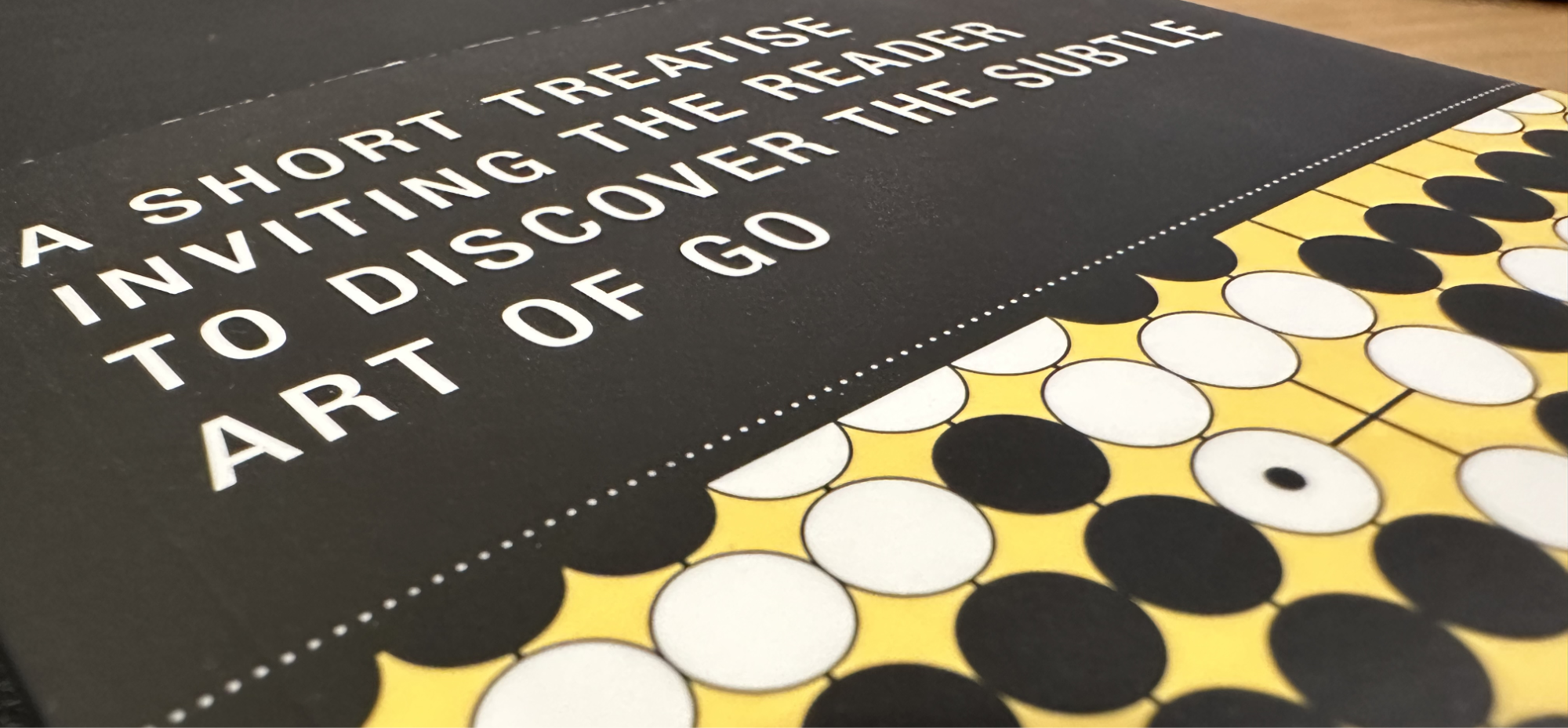
Only one activity exists to which go may be reasonably compared.
We will have understood it is writing.
This is a first post, of many posts, hopefully. The inspiration for this came from plodding through (very slowly) Writing for Developers, although the truth is, it’s not really reading about writing that begets more writing, but rather the act of doing the thing itself. Writing begets more writing; reading begets more reading. I’ve been quite rusty at the writing game (writing code does not really count), and so thought as creative endeavors go, it was easier to ease myself in with something relatively easy (writing about books) compared to something much more difficult (writing about code, or life). So…